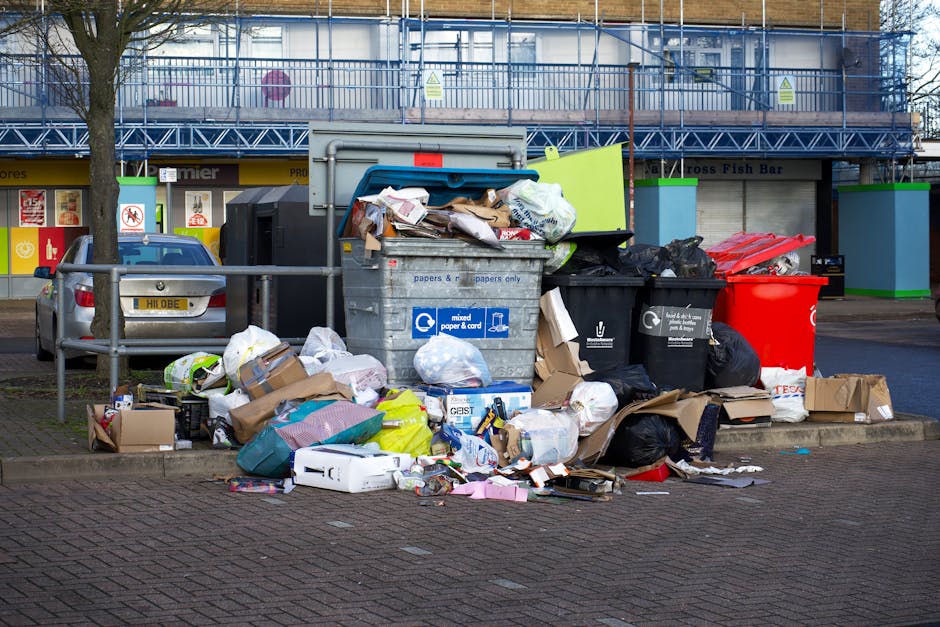
Hounslow Council rubbish rules for Chiswick homeowners

If you own a home in Chiswick, rubbish rules can feel straightforward one minute and oddly complicated the next. A normal bin day is fine. Then you have a sofa, a broken fridge, a few sacks from a loft clear-out, and suddenly you are wondering what counts as household waste, what needs special handling, and what Hounslow Council will actually take. This guide on Hounslow Council rubbish rules for Chiswick homeowners breaks it down in plain English, with the practical bits front and centre.
You will find out how the system works, where the common mistakes happen, what to do with bulky items and awkward waste, and when it makes sense to use a professional clearance service. Let's face it: nobody wants a missed collection, a blocked pavement, or a black sack that sits there looking accusatory for three days. Been there, not ideal.
Why Hounslow Council rubbish rules for Chiswick homeowners Matters
Chiswick homes tend to generate a slightly awkward mix of waste. You have everyday kitchen rubbish, recycling, garden cuttings, broken furniture, old toys, renovation debris, and sometimes items that are simply too heavy or too hazardous for a normal bin. Knowing the local rules matters because the wrong approach can create a nuisance, delay collection, or leave you with waste that is not legally disposed of.
For homeowners, the real issue is not just compliance. It is convenience, cleanliness, and avoiding repeat effort. If you are clearing a house before a sale, emptying a garage, or trying to keep a family home tidy after a few weekends of "I'll deal with that later," the waste piles up fast. And once it piles up, it feels bigger than it looked on Friday morning.
There is also a neighbourhood angle. Chiswick streets are busy, parking can be tight, and pavements need to stay clear. So even when something seems like a quick put-it-out-and-forget-it job, it can create problems if it is bulky, poorly sorted, or left out at the wrong time. That is where a sensible plan saves you a lot of grief.
How Hounslow Council rubbish rules for Chiswick homeowners Works
At a high level, the system usually separates waste into categories: general household rubbish, recycling, garden waste, food waste where applicable, bulky items, and specialist materials that need separate handling. The exact collection setup can vary by property type, street access, and the current council arrangements, so it is always worth checking the latest local instructions before you put anything out.
In practical terms, the council expects waste to be presented in the right container, on the correct day, and in a form that can be lifted safely. That means no overfilled sacks spilling onto the pavement, no loose rubble dumped beside bins, and no mystery items mixed in with recycling because they were easier to throw together. Easy to say, harder to remember after a busy Saturday, but it really does matter.
Bulky waste is where many homeowners get caught out. A mattress, a sofa, or a broken appliance is not the same as bagged rubbish. These items often need a separate collection route, a special booking, or a private clearance solution. If you are dealing with a larger household clear-out, services such as house clearance or home clearance can be a sensible alternative because they deal with mixed items in one organised visit.
For renovation work, garden jobs, or loft clear-outs, the same logic applies. Waste type drives the right disposal method. For example, a few bags of leaves are one thing; wet soil, broken fencing, and old slabs are another. If the waste stream is mixed, specialist collection is usually more efficient than trying to force it through standard household bins. For heavier jobs, a professional builders waste clearance or garden clearance service can keep things simple.
Key Benefits and Practical Advantages
Following the rules properly is not only about avoiding hassle. There are some very real benefits for Chiswick homeowners, especially if you live in a terrace, flat, or a property with limited storage.
- Cleaner kerb appeal: bins, bags, and bulky waste are less likely to spoil the look of your frontage.
- Fewer missed collections: correctly sorted and presented waste is more likely to be taken first time.
- Less stress: you know what to do with odd items instead of guessing and hoping for the best.
- Better space management: garage, loft, and shed clutter clears faster when you have a plan.
- Safer handling: awkward, heavy, or sharp items are less likely to cause injury.
There is also a time-saving advantage that people underestimate. Once you understand the system, you stop making little decisions every five minutes. That empty paint tin? Hold. That old chair? Separate. That bag of mixed junk from the loft? Decide now rather than next Tuesday. The mental load drops, which is honestly half the battle.
If you need a one-off uplift for a bigger clean-up, waste removal can bridge the gap between what the council collects and what your household needs to get rid of quickly and properly. For homeowners dealing with furniture specifically, furniture disposal and mattress and sofa disposal are especially useful options.
Who This Is For and When It Makes Sense
This topic is for pretty much any Chiswick homeowner who produces more than a standard wheelie bin's worth of waste now and then. That might sound obvious, but there are some clear scenarios where the rules really start to matter.
- You are moving house and need to clear out years of accumulated stuff.
- You are refurbishing a kitchen, bathroom, or spare room.
- You are sorting a loft, garage, or shed that has turned into a storage mystery.
- You have bulky furniture that will not fit normal collection routines.
- You are gardening heavily and generating cuttings, soil, pots, and broken tools.
- You manage a flat, maisonette, or shared property where bin space is tight.
It also makes sense if you want a cleaner, faster route than waiting around for multiple council collections. To be fair, sometimes waiting is perfectly fine. If you only have a small amount of waste and it is all standard household rubbish, the council route is usually the simplest. But if you are staring at a pile of mixed items in the hallway at 8 p.m. on a weekday, the calculation changes quickly.
Homeowners in older Chiswick properties often run into access issues too. Narrow front paths, controlled parking, and limited side access can make lifting and loading awkward. In those cases, a tailored collection approach is usually easier than trying to manage everything yourself in stages.
Step-by-Step Guidance
If you want to stay on the right side of local rubbish rules and keep the process smooth, use a simple method. No drama, just a clear sequence.
- Sort the waste by type. Separate general rubbish, recycling, garden waste, furniture, electrical items, and anything hazardous.
- Check what is accepted in normal household collections. Only put out the items and quantities that fit the council's collection arrangements.
- Bundle and bag properly. Keep sacks manageable, containers secure, and sharp edges covered.
- Set aside bulky or specialist items. Do not assume they can go out with a standard bin load.
- Think about timing and access. Put waste out at the right time so it does not block the pavement or attract attention for the wrong reasons.
- Book a specialist service where needed. For mixed or awkward waste, a professional collection can save you hours.
A very ordinary example: you clear your utility room and find an old vacuum, two broken chairs, a sack of general waste, and a few bags of cardboard. The cardboard can often be managed separately if clean and dry. The chairs probably need furniture disposal. The vacuum may need electrical handling. Suddenly, one "quick clear-out" becomes a mixed waste project. That is normal. It just needs organising.
If you are dealing with a loft or garage, the same process works well. Start with one corner, not the entire room. It sounds small, but it stops the job feeling like a mountain. One shelf, one box, one bag at a time. That old-fashioned approach still works.
Expert Tips for Better Results
Here are the habits that tend to make the biggest difference in real homes.
- Keep a separate "uncertain" pile. If you do not know what something is, do not mix it in with general rubbish. Deal with it later.
- Avoid overfilling sacks. Heavy bags split, and split bags are a nuisance for everyone involved.
- Break down cardboard and flat-pack furniture. It saves room and makes collection easier.
- Store hazardous items apart. Paint, chemicals, sharps, and some appliances should never be treated casually.
- Use a small staging area. A driveway, front room corner, or garage patch can help you organise the job without cluttering the whole house.
One more useful tip: if you are planning works, decide the disposal route before the work starts. That sounds obvious, but people often finish a DIY job and then stand in silence in front of three rubble sacks and a broken sink. Not a great moment. Plan first, lift once.
If your waste includes old appliances or cooling units, the removal path changes again. Fridges and similar items need more care than normal household junk, so a dedicated fridge and appliance removal service is often the cleanest option. For confidential paperwork, confidential shredding is a better choice than stuffing documents into general waste.
For homeowners who care about the environmental side, it is also worth checking the provider's approach to reuse and recycling. You do not need perfection. But if an item can be reused or separated into recyclable material, that is usually preferable to sending everything to the same place.
Common Mistakes to Avoid
Most rubbish problems come from a few predictable mistakes. The good news is that they are easy to avoid once you know what to look for.
- Leaving waste out too early. It can become clutter, attract pests, or create a complaint.
- Mixing prohibited items into recycling. One wrong item can spoil the whole container.
- Assuming bulky items are treated like bagged waste. Sofas and mattresses are not just "big rubbish."
- Dumping builders waste with household rubbish. Heavy or sharp construction material needs a different route.
- Ignoring access and safety. Stacking bags near gates, steps, or parked cars is asking for trouble.
- Forgetting special waste. Hazardous items need proper handling. No shortcuts.
Another mistake is underestimating how long a clear-out takes. People think a garage will take an hour. Then they find broken tools, a damp box of magazines, and six things that need decisions. Two hours later, everyone is hungry and someone is muttering about tea. It happens.
If you want to avoid that spiral, treat waste sorting as part of the job, not an afterthought. That mindset alone saves a lot of mess and a lot of backtracking.
Tools, Resources and Recommendations
You do not need a fancy system, just a few practical tools that make the job less annoying.
- Strong bin bags or rubble sacks for separating lighter and heavier waste.
- Marker labels so you can tag items for reuse, recycling, disposal, or donation.
- Work gloves for handling sharp, dusty, or grimy items.
- A tape measure for bulky furniture or appliances, especially if access is tight.
- Basic cleaning supplies so you can tidy the space once the waste is gone.
For bigger domestic projects, it often helps to compare a few service routes before choosing. If you are clearing an entire property, flat clearance, loft clearance, or garage clearance may be more suitable than trying to piece the job together yourself.
Homeowners also benefit from understanding what can go into a skip before they commit to one. The page on what can go in a skip is a useful reference point for sorting out common confusion around mixed waste. Skips can be handy, but they are not a magic bin for absolutely everything. That distinction matters.
If you are comparing disposal routes, pricing and timing usually matter as much as what is being removed. For many people, the simplest next step is to look at pricing and quotes alongside the type of waste you have, then decide what gives you the least hassle.
Law, Compliance, Standards, or Best Practice
In the UK, homeowners have a general responsibility to make sure waste is handled and disposed of properly. You do not need to become a legal expert, but you do need to be careful about where your rubbish goes, how it is stored, and who removes it. If waste is fly-tipped or handed to an unlicensed operator, the headache can come back to you.
Best practice is simple: keep waste identifiable, separate special items, use legitimate collection methods, and retain a sensible record of who removed what when it is a larger job. That is particularly relevant for property clearances, garden overhauls, and renovation work.
It is also worth thinking about safety and insurance. When waste is being collected from a home, there is always some risk of lifting injuries, trips, or accidental damage. A provider that has clear operational standards, like those outlined in health and safety policy and insurance and safety, gives you a better sense that the job will be done properly. No one wants a careful clean-up to end with a scraped wall or a very grumpy knee.
For waste that may contain paint, solvents, asbestos-related material, or other potentially harmful substances, the safest assumption is that it needs specialist handling. That is where hazardous waste disposal becomes the relevant route. When in doubt, do not improvise. Seriously, don't.
Responsible disposal is also about sustainability. Reuse and recycling should be part of the conversation where practical, and it helps to choose services that take that seriously. If that matters to you, take a look at recycling and sustainability information before booking.
Options, Methods, or Comparison Table
Different waste problems need different solutions. Here is a straightforward comparison to help you decide.
| Option | Best for | Strengths | Limitations |
|---|---|---|---|
| Standard council collections | Everyday household rubbish and routine recycling | Simple, familiar, usually the cheapest route | Not ideal for bulky, hazardous, or mixed clear-out waste |
| Skip hire | DIY waste, renovation waste, larger mixed loads | Useful for larger volumes, can suit longer projects | Needs space, may require permits, and not all waste types are suitable |
| Man and van-style waste removal | Bulky items, rapid one-off clear-outs, awkward access | Fast, flexible, often easier for homes with limited room | May not suit every waste type or very large project |
| Full property clearance | House moves, bereavement clear-outs, lofts, garages, flats | Handles mixed loads and saves time | Not needed for small, routine waste |
For many Chiswick homeowners, the choice comes down to volume, access, and urgency. A tiny bin issue is one thing. A hallway full of furniture and bags is another. Different job, different tool.
Case Study or Real-World Example
Imagine a homeowner in Chiswick who has decided to reclaim a loft before redecorating the upstairs landing. At first glance, the job looks modest: a few boxes, an old suitcase, some broken toys, and a couple of pieces of furniture that have been kept "just in case" for years.
Once the sorting starts, the picture changes. There is a cracked mirror, a small pile of general waste, a tired mattress, and a damaged shelving unit that is too bulky for the usual bin routine. The homeowner could try to split the job across several council collection cycles, but that would mean storage headaches and more time spent moving items around the house.
Instead, the waste is grouped by type. Reusable bits are separated. General rubbish is bagged. The mattress and shelving are assigned to specialist removal. The result is simple: the loft is cleared in one go, the hallway stays usable, and the project stops taking over the house. It is not flashy, just efficient. Which, honestly, is what most people want.
That sort of scenario is common when homeowners are preparing for tradespeople, staging a sale, or just trying to breathe again in a less cluttered home. A tidy clear-out is rarely about one giant item. It is usually the accumulation of five or six small decisions.
Practical Checklist
Use this before you put anything out or book a clearance.
- Have I separated general waste from recycling?
- Are any items bulky, heavy, sharp, or awkward?
- Do I have any electrical, appliance, or specialist items?
- Could any of this be reused, donated, or recycled?
- Is there anything hazardous, liquid-based, or restricted?
- Have I checked access, parking, and collection timing?
- Do I need a skip, a one-off removal, or a full clearance?
- Have I avoided overfilling bags or mixing waste types?
If you can tick most of those off, you are in a good place. If not, pause and sort the tricky items first. That little bit of patience usually saves far more time later.
Get a free quote today and see how much you can save.
Conclusion
For Chiswick homeowners, rubbish rules are really about staying organised, keeping your property tidy, and choosing the right disposal route for the waste in front of you. Some jobs fit neatly into standard council collections. Others need a bit more thought, especially when furniture, appliances, garden waste, or renovation debris is involved.
The good news is that once you understand the main categories, it becomes much easier to make the right call. Sort first, separate special items, and do not force awkward waste into the wrong system. That one habit alone avoids most problems. And if the job is bigger than you expected, that is perfectly normal. Most clear-outs are. One box leads to another, then another, and suddenly it is Sunday afternoon.
With the right approach, you can keep on top of local rubbish rules without turning the house upside down. A bit of structure goes a long way, and a calm plan is usually enough to get the job done properly.
Frequently Asked Questions
What are the main rubbish rules Chiswick homeowners need to follow?
The main rule is to separate waste properly and present it according to the collection method available to your property. General household waste, recycling, garden waste, bulky items, and hazardous materials should not all be treated the same way.
Can I put bulky items out with my normal rubbish collection?
Usually, no. Bulky items such as sofas, mattresses, and large appliances normally need a separate arrangement or a specialist removal service. They are not the same as bagged household waste.
What should I do with a broken fridge or appliance?
Appliances are best handled separately because they often need special removal and processing. A dedicated appliance collection is usually safer and easier than trying to force it into a regular waste stream.
Is garden waste treated differently from household rubbish?
Yes, in practice it often is. Grass cuttings, branches, soil, and garden debris can need a different collection route depending on the volume and type of material. Mixed garden waste is especially worth sorting carefully.
Can I leave rubbish on the pavement before collection day?
Only if it is allowed by the collection arrangement and presented correctly. Leaving items out too early can cause access issues, complaints, or mess, especially on narrower Chiswick streets.
Do I need a skip for a home clear-out?
Not always. Skips are useful for certain renovation or large-volume jobs, but for smaller or mixed household clear-outs, a direct removal service may be more practical. It depends on the waste type, volume, and access.
What if I have paint, chemicals, or other risky materials?
Those items should be treated as hazardous or specialist waste rather than general rubbish. Do not mix them into normal bags. Separate handling is the safer route.
How do I know whether to use council collection or a private service?
If you have ordinary household waste in the right containers, council collection may be enough. If the waste is bulky, mixed, heavy, or time-sensitive, a private clearance option is often easier and quicker.
What is the best way to clear a loft or garage?
Sort everything into categories first, then decide what can be reused, recycled, or removed as bulky waste. Loft and garage clearances usually go more smoothly when you tackle them in small sections rather than all at once.
How can I avoid common rubbish mistakes at home?
Do not overfill bags, do not mix specialist items with normal waste, and do not assume every large item can go out with routine collections. A few minutes of sorting prevents most headaches.
Is it worth using a professional waste removal service?
For anything beyond simple household rubbish, often yes. It can save time, reduce lifting, and make the disposal process much more straightforward, especially if you have mixed waste or limited access.
What if I am still unsure about a specific item?
Set it aside rather than guessing. Unusual items are where people most often go wrong. If it feels awkward, heavy, hazardous, or difficult to categorise, treat it separately and choose the safer disposal route.