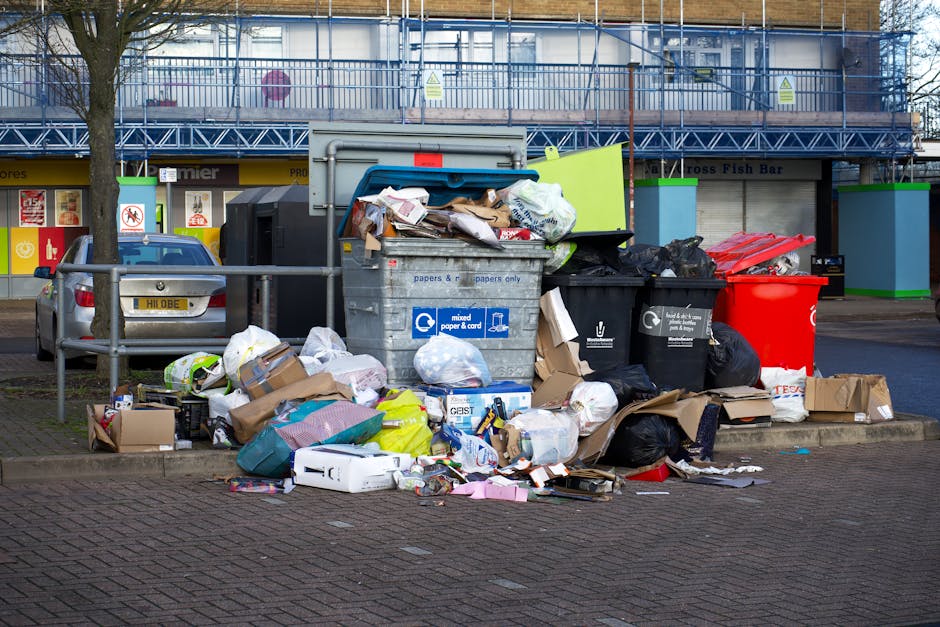
Cheap bulky waste removal Chiswick Business Park deals: how to save money without cutting corners
If you are trying to clear bulky items at Chiswick Business Park, you probably want the same three things most people want: a fair price, a fast turnaround, and no hassle on the day. Cheap bulky waste removal Chiswick Business Park deals can deliver that balance, but only if you know what to look for. The cheapest quote is not always the best value, and the "premium" option is not always worth the extra spend either. In practice, the sweet spot is a service that is priced clearly, turns up when promised, and handles the awkward bits properly.
This guide breaks down how bulky waste removal works, what affects price, which items commonly cause problems, and how to compare deals sensibly. You will also find a checklist, a side-by-side comparison, and a realistic example so you can make a confident decision without second-guessing yourself at the kerbside.
Why cheap bulky waste removal matters
Bulky waste is not the same as a normal bin bag job. Think mattresses, worn office chairs, broken filing cabinets, shelving, old desks, heavy appliances, and the odd item that seems to have doubled in weight overnight. At a busy location like Chiswick Business Park, those items can take up valuable space fast. One forgotten sofa in a storeroom can become a weekly nuisance, and a pile of damaged furniture near an exit can quickly get in the way of staff, contractors, or deliveries.
The reason "cheap" matters here is simple: bulky waste removal is often booked alongside other spending. You may already be paying for fit-out work, moving costs, refurbishment, or end-of-lease clean-up. A well-priced removal deal helps keep the whole job under control. But cheap should never mean vague. If a quote looks oddly low, ask what is included, because hidden access charges, labour fees, or disposal extras can turn a bargain into an irritation.
There is also a time factor. Many businesses at Chiswick Business Park work to tight schedules, so a clearance that drags on is expensive in a different way. Lost time, blocked access, and staff working around clutter all chip away at efficiency. So yes, cheap is useful. Fast is useful too. What you really want is sensible value.
Expert summary: The best bulky waste deal is usually not the lowest headline price; it is the one that removes the items, handles loading safely, and leaves you with no surprise add-ons.
If you are managing a wider commercial clearance, it can help to look at waste removal options and, where relevant, the broader business waste removal service alongside the bulky items. That way, the whole job is joined up instead of stitched together at the last minute.
How bulky waste removal works
At its core, bulky waste removal is a collection, loading, transport, and disposal service for large items that are awkward to move by normal means. In a commercial setting, that often means two people or more, protective handling, and a vehicle sized to the load. The process is usually straightforward, but the details matter. A crew needs to know what is being removed, where it is located, whether there are stairs, lifts, loading bays, or restricted access, and whether anything needs separating before collection.
Most reputable services will ask for photos or a description first. That helps them judge volume, item type, and the likely labour involved. In our experience, a few clear pictures are worth a long email thread. They help avoid the classic issue where the quote is based on guesswork and everyone is disappointed later. Not fun. Nobody wants that Monday morning phone call.
Some jobs are simple: a handful of broken desks, a few chairs, maybe one mattress. Others are trickier. A bulky item may contain mixed materials, or it may be too heavy for one person to handle safely. Fridges, freezers, and other appliances can also need special handling, so if you have those in the mix, it is worth checking the dedicated fridge and appliance removal option. Likewise, sofas and mattresses often benefit from a specific route like mattress and sofa disposal, especially when the job includes multiple units.
A useful deal should explain the following in plain English:
- what items are included
- how much labour is covered
- whether loading is included
- what happens if the volume changes slightly on arrival
- any access constraints that may affect price
- how the waste will be sorted and taken away
That clarity is what keeps the "deal" from becoming a moving target.
Key benefits and practical advantages
The most obvious benefit is cost control. A good-value bulky waste removal deal lets you clear out large items without tying up internal staff or hiring equipment you will only use once. But there are several other advantages that often matter just as much.
1. Faster space recovery
Bulky waste takes up room in a very visible way. It can block storage areas, corridors, plant rooms, or office corners that should be doing something useful. Removing it quickly gives you your space back, and that often improves day-to-day operations immediately.
2. Less disruption to staff
When large items are left around, people start working around them. Boxes get stacked beside them, cleaners dodge them, and they become part of the scenery. That sounds harmless until someone trips, or a delivery route becomes awkward. A neat removal helps reset the environment.
3. Safer handling
Moving bulky waste incorrectly can lead to scratches, knocked walls, strained backs, and broken flooring. A trained team knows how to manage awkward objects, use the right grips, and judge what should not be lifted by hand. That is especially important in shared commercial spaces where presentation matters.
4. Better disposal outcomes
Bulky waste is often a mix of materials. A decent provider will sort items with recycling and reuse in mind where possible. If sustainability matters to your team, it is worth reading the company's approach to recycling and sustainability so you know how items are processed after collection.
5. A simpler procurement conversation
Cheap bulky waste removal Chiswick Business Park deals can actually save admin time, which is easy to overlook. A clear quote, a defined service, and a simple booking process mean fewer calls, fewer approvals, and less back-and-forth. And let's face it, that alone can be worth a lot.
Who this is for and when it makes sense
This kind of service suits a wide range of people and teams. It is not just for major refurbishments or end-of-tenancy clear-outs. In fact, many smaller jobs are exactly where a good deal helps most, because the waste is too much for normal rubbish collection but too little to justify a huge project.
Typical users include:
- office managers clearing desks, chairs, and storage units
- facilities teams dealing with damaged or outdated furniture
- landlords and managing agents preparing a unit for handover
- contractors removing leftover fit-out or strip-out debris
- small businesses replacing old furnishings on a budget
- tenants clearing bulky items before moving out
If your load includes office furniture, it may be useful to compare with an office clearance service, especially when there are mixed items across several rooms. For home-based or mixed-use situations, services such as home clearance or flat clearance may be more appropriate. It depends on the setting, really.
It makes sense to book bulky waste removal when:
- items are too large for normal bins or on-site storage
- your team should not be lifting heavy items without support
- you have a deadline tied to move-out, refurbishment, or reopening
- you want the cheapest practical solution rather than a drawn-out clean-up
- you need the collection handled by people who know commercial access rules
Sometimes the best time to act is before the clutter becomes urgent. That sounds obvious, but urgency is expensive. It really is.
Step-by-step guidance
If you want the best deal, a little preparation goes a long way. The smoother the collection, the better the price tends to be. Here is a practical way to handle it.
- List every item clearly. Count chairs, desks, cabinets, mattresses, appliances, or mixed bulky items. Do not say "a few bits" if you can help it.
- Take photos from more than one angle. A picture of the item, the access route, and any stairs or lift restrictions is useful. The loading bay matters too.
- Separate special items. Keep hazardous materials, confidential papers, and anything electrical or refrigerant-based apart until the provider confirms how they should be handled.
- Ask what is included in the quote. Check labour, loading, transport, disposal, and any minimum charge.
- Compare more than the headline price. The cheapest quote is only cheap if it actually covers the job.
- Confirm timings. A lower-cost deal is no bargain if it misses your deadline or forces a second visit.
- Prepare the site. Move loose personal items away from the bulky waste so the crew can work safely and quickly.
- Keep someone briefed on the day. One named contact avoids confusion when the team arrives.
If the collection is tied to a broader business tidy-up, you may also want to review pricing and quotes before you book. A transparent pricing page helps you understand how the service is usually structured, which makes comparison easier.
A small but important point: if you are unsure whether something is allowed, ask before collection day. Fridges, certain chemicals, and other restricted items can change the whole plan. Better to ask a slightly awkward question than to discover a problem in the car park at 8:30 in the morning.
Expert tips for better results
The best savings usually come from preparation and fit, not aggressive haggling. Here are the things that tend to make the difference in the real world.
Bundle compatible items together
If you have a mix of furniture and general bulky waste, grouping similar items can make loading faster and quoting more accurate. For example, a run of office chairs, a couple of cabinets, and a desk is easier to assess than a scattered list of individual pieces across several rooms.
Be honest about access
Stairs, narrow corridors, timed loading zones, underground parking, and lift restrictions all affect labour. If access is awkward, say so. It is better for the quote to reflect reality than for the crew to discover it on arrival and have to adjust things. Nobody enjoys that moment of silence when the item simply will not fit.
Choose the right service type
For purely bulky items, a targeted removal is often enough. For larger mixed clearances, a wider service such as house clearance or loft clearance may actually be better value. The point is not to buy the biggest service; the point is to buy the right one.
Check insurance and safety details
For commercial jobs, practical reassurance matters. You are inviting a team into a managed space, so it is sensible to check insurance and safety information and understand how the provider handles lifting, access, and site protection. A low price is less attractive if it comes with poor care.
Think about the full cost of delay
Sometimes paying a little more for a faster pickup saves money overall. If a storage bay must be cleared before a delivery, or a meeting space must be reset before clients arrive, the "cheap" option that comes next week is not really cheap at all. Timing has a value.
Common mistakes to avoid
Most bad experiences with bulky waste removal are avoidable. A few straightforward mistakes crop up again and again.
- Booking on price alone. A low headline figure may exclude labour or disposal fees.
- Underestimating volume. One extra cabinet can change the load enough to affect pricing.
- Ignoring access issues. A basement store room and a ground-floor loading bay are not the same job.
- Mixing restricted items in without warning. That can cause delays or a refused collection.
- Leaving everything for the crew to sort. A little preparation speeds things up and often lowers cost.
- Forgetting to check disposal routes for special items. Appliances and mixed materials may need different handling.
One common slip is assuming all bulky waste is treated the same. It is not. A damaged table and a fridge are very different animals, if you will forgive the phrase. Likewise, a pile of office chairs is not the same as a load containing confidential cabinets or items with electrical components.
Another mistake is forgetting the human side of the job. If your team needs to keep working around the clearance, make sure the collection window is realistic. A rushed pickup can create more mess than it solves.
Tools, resources and recommendations
You do not need fancy software or specialist equipment to prepare for a bulky waste collection, but a few practical tools make the process smoother.
- Phone camera: capture items, access routes, and any tight corners.
- Simple item list: count pieces and note sizes where possible.
- Measuring tape: useful for desks, cabinets, and larger furniture.
- Site contact list: one person should be available on collection day.
- Basic labels or notes: helpful if some items are staying and others are going.
For businesses that clear items regularly, it also helps to keep a standing reference for what goes where. The page on what can go in a skip is useful if you are comparing skip hire against collection-based removal, because it helps you think through item type and disposal constraints before you choose a method.
If the bulky waste job includes confidential materials, do not just add them to the pile and hope for the best. A dedicated confidential shredding service may be the more responsible route. That is especially true in office environments where old files, hard copies, or archived paperwork are still hanging around in a cupboard somewhere.
Law, compliance, standards, or best practice
For commercial bulky waste, compliance is mostly about duty of care, safe handling, and using a provider that deals with waste appropriately. You do not need to become a waste-law specialist, thankfully, but you do need to avoid casual mistakes.
Best practice usually includes:
- keeping a clear record of what was collected
- making sure waste is transferred to an appropriate facility
- separating items that need special handling
- avoiding unsafe manual lifting by staff who are not trained for it
- making sure the provider has appropriate insurance and procedures
Where hazardous materials are involved, the rules become stricter. Paints, chemicals, and other risky items should not be treated as ordinary bulky waste. If there is any doubt, use a service that explicitly covers hazardous waste disposal. That protects your people and keeps the job on the right side of safe practice.
There is also a good-practice angle on sustainability. Many businesses at Chiswick Business Park now prefer arrangements that reduce landfill where possible, separate reusable items, and keep the collection process tidy. That is sensible. It is also easier to explain internally when someone asks where the old furniture went.
Options, methods, or comparison table
There are usually three practical ways to clear bulky waste. The right one depends on volume, access, deadline, and how much you want your own team involved.
| Method | Best for | Pros | Trade-offs |
|---|---|---|---|
| Bulky waste removal service | Mixed large items, limited staff time, quick turnarounds | Fast, handled for you, less disruption | May cost more than doing the lifting yourself |
| Skip hire | Ongoing project waste, mixed light-to-medium debris, longer jobs | Good for phased loading, flexible if you have space | Requires space and manual loading; not ideal for heavy furniture alone |
| Internal handling and disposal | Very small loads and teams with time, equipment, and capacity | Can be inexpensive at first glance | Staff time, lifting risk, transport logistics, and disposal admin all add up |
If you are weighing skip hire against removal, it is worth understanding limits and item suitability. The dedicated page on what can go in a skip gives a helpful reference point, especially if your job mixes furniture with lighter building waste.
For many Chiswick Business Park deals, the removal service wins because it solves the whole problem in one visit. No loading marathons. No guessing whether a cabinet will fit. No last-minute lifting crew from the office kitchen, which is always a bad idea.
Case study or real-world example
Here is a realistic example. A small company in a shared office setting decides to replace ten old office chairs, two broken storage units, and a scratched meeting table. The items have been pushed into a spare room for a few weeks, then left because everyone is busy. Sound familiar?
At first, the team assumes the cheapest option is a general collection at the end of the month. But after checking access, they realise the lift is only available during a narrow window and the loading bay is shared with deliveries. If they wait too long, they will be juggling the collection with a packed calendar and an awkward building schedule. So they gather photos, list each item, and ask for a quote that reflects the actual access conditions.
The final deal is not the absolute lowest headline price, but it is still cheap in the way that matters. The crew arrives in the correct window, clears the items in one visit, and the room is usable again by lunchtime. The office feels lighter, the corridor is clear, and the facilities team can stop thinking about that one wobbling cabinet. Small victory, but a real one.
That is the pattern to aim for: a fair price, no confusion, and a tidy result. Not glamorous, but deeply satisfying.
Practical checklist
Use this before you book.
- Have I listed every bulky item clearly?
- Have I added photos of the items and access route?
- Have I checked whether any items need special handling?
- Have I compared the actual scope, not just the lowest price?
- Have I confirmed the collection window and site contact?
- Have I checked for loading restrictions, stairs, or lift limits?
- Have I separated confidential or hazardous materials?
- Have I reviewed whether a broader clearance service would be better value?
- Have I asked about recycling and disposal approach?
- Have I read the quote carefully for any extras or exclusions?
If you can tick most of those off, you are probably in good shape. If not, pause for five minutes and sort the details out. That little bit of prep can save a proper headache later.
Conclusion
Cheap bulky waste removal Chiswick Business Park deals are worth pursuing, but only when "cheap" means efficient, transparent, and well matched to the job. The smartest savings usually come from accurate information, the right service type, and a provider that understands commercial access, heavy lifting, and disposal discipline. That is the real game.
Whether you are clearing office furniture, moving out of a unit, or simply trying to reclaim space, the aim is the same: remove the clutter cleanly and keep the process simple. Do that, and the job feels much less stressful than it first looked. Honestly, it often turns out to be easier than people fear.
Get a free quote today and see how much you can save.
And if you can clear one awkward corner, one storage room, or one stubborn pile this week, that is already a good step. The space will feel better straight away.
Frequently Asked Questions
What counts as bulky waste at Chiswick Business Park?
Bulky waste usually means large items that are too big or awkward for normal commercial bins. Common examples include desks, chairs, cabinets, sofas, mattresses, shelving, and some appliances.
How do I get the cheapest bulky waste removal deal?
The best way is to give a clear item list, share photos, confirm access details, and choose the right service for the job. Accurate information prevents surprise charges and helps the provider price the collection properly.
Is bulky waste removal cheaper than skip hire?
It depends on the job. For heavy furniture or mixed bulky items, removal can be better value because you do not have to load everything yourself. For ongoing project debris, a skip may suit better. Compare the full effort as well as the price.
Can I include office furniture in a bulky waste collection?
Yes, office furniture is one of the most common bulky waste categories. Desks, chairs, cabinets, and meeting tables are all typical items for collection.
What should I do with fridges, freezers, or other appliances?
These items often need specific handling, so it is wise to separate them and ask for appliance-specific removal. Refrigeration units in particular should not be treated like ordinary furniture.
Do I need to prepare the items before collection?
Some preparation helps a lot. Clear a route, move personal items away, and make sure the team can access the bulky waste without dodging boxes or loose clutter.
Is it safe for staff to move bulky waste themselves?
Not always. Heavy or awkward items can cause injury or damage if handled incorrectly. If the load is large, better to use a trained team rather than improvising with whoever is free.
What if I only have a few items?
Smaller loads can still be worth collecting, especially if they are urgent or awkward. Ask for a quote anyway. Sometimes a small job is still the most practical option.
Can bulky waste be recycled?
Often, yes, at least in part. Many items contain materials that can be sorted and routed through recycling or reuse processes. The exact outcome depends on the item type and condition.
What should I check before accepting a quote?
Check what is included, whether labour and loading are covered, how access affects price, and whether any items are excluded. A quote that looks low but omits key parts is not really a deal.
What if my waste includes confidential paperwork or sensitive materials?
Keep those separate and arrange the right disposal route. Confidential documents should not go out with ordinary bulky waste, even if they are packed in old cupboards or boxes.
How far in advance should I book?
If you have a deadline, book as early as you can. For straightforward jobs, a shorter lead time may be fine, but access-sensitive collections are always easier to manage when arranged in advance.